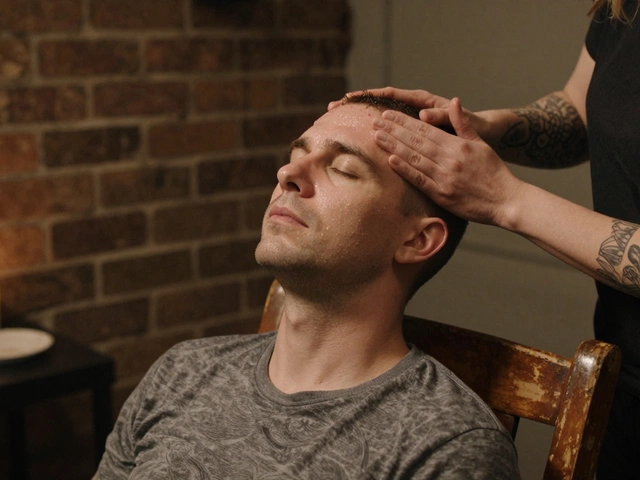

Ever feel like your body's got a permanent knot in it? Like your shoulders are stuck in a vice grip after a long day? That's stiffness talking. And if you're tired of popping painkillers or just living with it, deep tissue massage is a therapeutic technique targeting deeper muscle layers to break up adhesions and improve mobility. Not the kind that's all about relaxation - this is serious muscle work. But stick with me, and you'll see why it's worth the soreness.
What exactly is deep tissue massage?
Deep tissue massage isn't just a fancy name for a hard rubdown. It's a targeted technique that goes after the deeper layers of muscle and connective tissue. Think of it like peeling an onion - regular Swedish massage works the surface layers, but deep tissue digs in where the real problems hide. It's especially good for chronic pain, sports injuries, or when your muscles are so tight they feel like concrete.
Here's the thing: when muscles get stuck in a tense state for too long (like from sitting at a desk all day), they form adhesions - sticky spots where muscle fibers clump together. These adhesions mess with your movement and cause pain. Deep tissue massage breaks those up with slow, deliberate pressure. It's not about being gentle; it's about getting to the root of the problem.
How does it actually work?
Let's get science-y for a second. Your muscles have this thing called fascia - a web of connective tissue that wraps around everything. When fascia gets tight or stuck, it pulls on your muscles and joints, causing stiffness. Deep tissue therapists use their elbows, knuckles, even forearms to apply focused pressure. They work along the grain of the muscle fibers, not just random squeezing. It's like untangling a knot in a rope - you have to follow the path to fix it.
I've seen clients who couldn't lift their arms after a car accident. After a few sessions, they were back to normal. It's not magic; it's physics. Pressure breaks up adhesions, increases blood flow to the area, and helps your body heal itself. The key is consistency - one session won't fix years of bad posture, but regular treatments make a huge difference.
Why is it so popular these days?
More people are realizing that painkillers and rest aren't always the answer. Athletes use it to recover faster. Office workers use it to combat desk-related stiffness. Even grandparents use it to stay active. It's not just for the gym bros - anyone with chronic tension can benefit.
Take my friend Jake, a truck driver. He'd been dealing with lower back pain for years. After trying physical therapy with limited success, he started regular deep tissue sessions. Now he drives 12-hour shifts without pain. Why? Because it targets the deep muscles that other therapies miss. It's not about feeling good in the moment - it's about fixing the problem for good.

How to find a good therapist (and avoid the scams)
Not all massage therapists are created equal. Some call themselves "deep tissue" but just do a hard Swedish massage. Here's how to spot the real deal:
- Check their certifications. Look for licensed massage therapists (LMTs) with specific training in deep tissue techniques.
- Read reviews. Real clients will mention whether the therapist went deep enough or just skimmed the surface.
- Ask about their experience. A good therapist will explain exactly what they'll do and why, not just say "I'll give you a deep massage."
Prices vary, but in 2026, a solid deep tissue session in London runs $90-$140 for 60 minutes. Cheaper than that? Might be a red flag. More expensive? Maybe they're charging for luxury spa vibes, not actual therapy. Always ask what's included - some places add extras like hot stones, but you want the focus on deep tissue work.
What to expect during your first session
Don't expect a relaxing spa experience. This is work. You'll probably feel some discomfort - but it should be a "good hurt," not sharp pain. A good therapist will check in with you constantly: "Is this too much?" "Adjust pressure?" If they don't ask, find someone else.
They'll likely start with lighter strokes to warm up the muscles, then gradually increase pressure. You'll need to communicate. If it hurts too much, say so. If it's not deep enough, say so. This isn't a silent treatment. The therapist should be working with you, not just doing their own thing.
After the session, you might feel sore for a day or two. That's normal - it's like a workout for your muscles. Drink plenty of water to help flush out toxins. Skip intense exercise right after; give your body time to recover.

Myth vs. Reality
Myth: Deep tissue massage is just a harder version of regular massage.
Reality: It's a completely different technique. You can't just press harder - the approach is specific. It's about targeting problem areas with precision, not brute force.
Myth: You have to be in pain to need it.
Reality: It's great for prevention too. Regular sessions can stop stiffness before it becomes chronic pain.
Myth: It's only for athletes.
Reality: Office workers, parents, anyone with tight muscles can benefit. It's not about how fit you are - it's about how your body feels.
How often should you get it?
There's no one-size-fits-all answer. If you're dealing with acute pain, weekly sessions for 4-6 weeks might be needed. For maintenance, once a month is enough for most people. Athletes might do it twice a week during training season. It's all about listening to your body.
I've had clients who swear by monthly sessions. Others do it only when they feel stiffness coming back. The key is consistency, not intensity. A little bit regularly beats one intense session every few months.
Does deep tissue massage hurt?
It shouldn't hurt, but it might feel intense. A good therapist will keep the pressure at a "good hurt" level - enough to be effective but not so much that you're in pain. If it's sharp or unbearable, tell them to ease up. Pain isn't necessary for it to work.
Can deep tissue massage help with sciatica?
Yes, often. Sciatica pain usually comes from tight muscles pressing on the sciatic nerve. Deep tissue work on the glutes and lower back can relieve that pressure. But it's not a cure-all - you might need physical therapy or medical treatment too. Always consult a doctor first.
What's the difference between deep tissue and sports massage?
Sports massage is tailored for athletes, focusing on injury prevention and performance. Deep tissue is more about fixing chronic muscle issues. They overlap a lot, but sports massage might include stretching and specific techniques for athletic recovery. Deep tissue is more about penetrating deep layers regardless of athletic context.
Is it safe for people with chronic conditions?
It depends. If you have osteoporosis, blood clots, or recent surgery, you should check with your doctor first. For most people with chronic pain (like arthritis), it's safe and helpful. Always tell your therapist about any medical conditions before the session.
How long does a session last?
Typically 60-90 minutes. Shorter sessions (30-45 mins) might focus on one area, like the back or shoulders. Longer sessions allow for more comprehensive work. Most therapists recommend at least 60 minutes for full benefits.